
Making the Same Different: The Art AI Cannot Make
Why Resonance Matters More Than Perfection
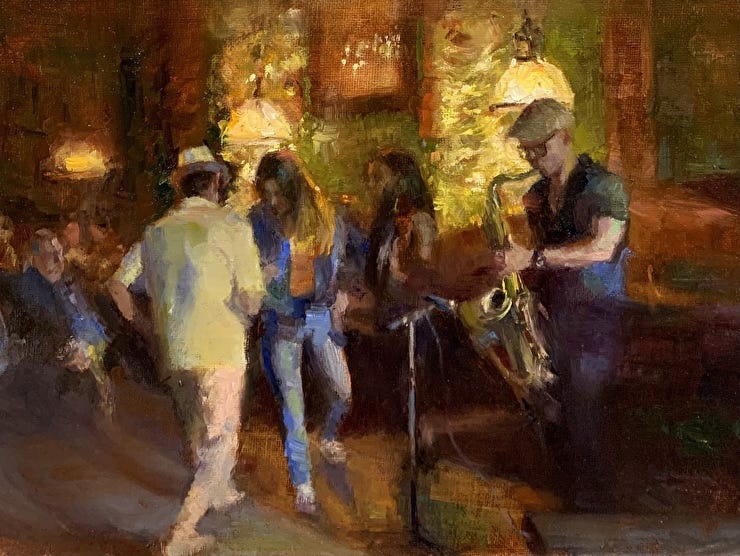
The fight to break through Consensus in order to produce the New results in works that do not fully conform to the conventional picture of the world. Accordingly, many classics seem uneven—sometimes even amateurish—from a strictly technical point of view.
— J.F. Martel, Reclaiming Art in the Age of Artifice
J.F. Martel wrote that sentence in his 2015 book, Reclaiming Art in the Age of Artifice. And while his book predated the rise of AI in the form of LLMs, he already intuited something important: What makes a work of art a classic, isn’t mere technical skill.
If classic status depended solely upon skill, then AI used for the final output might pose a problem for Art. But AI used in this way doesn’t “fight to break through Consensus to produce the New.” If anything, AI, at least the LLM versions of it, accelerates the “Consensus.”
AI polishes everything it touches technically. It makes everything the same while making nothing New. It produces mountains of “technically good” while producing no works that “do not conform to the conventional picture of the world.” It is pure techne with no poesis. There are use cases where this works well. But, when it comes to true art, we humans seem prefer the “New,” even when “uneven” and “amateurish.”
Consider what Hyde said in his review of jazz in the context of the song Nardis:
[With AI] if your ultimate goal is to be entertained, you can subsist on content-slop until your belly is full and your brain overstimulated. There’s no question of personal taste, since slop makes everything different the same.
Jazz on the other hand makes the same different. It is a contrafact art. It takes “standards”, popular tunes or songs that are already familiar, and transfigures them during every performance. In doing so, they become “lead” and the artist the alchemist that transmutes it and themselves into philosophical gold. —Hyde, Nardis
The “Classic” that J.F. Martel speaks of and the “philosophical gold” that Hyde praises in jazz musicians point to the same thing: resonance.
This resonance between humans represents communication of non-verbal Truth between humans—what we call Art. Resonance is more important than technical mastery because resonance is the point.
Through art, love is sent to strangers the artist may never meet in a way that mirrors the intimate love that occurs between soulmates and their creator. Because this resonance consists of love and truth, the whole is greater than the sum of the parts.
Paul Klee said that art does not reproduce the visible, but rather it makes visible. Technical proficiency, mastery, can only share the what of your creation. Resonance shares the why. And the why is what sells. The why is the truth you are making visible.
Because resonance is the point, mining your unique deep truths, style, vibe, and energies will be the most valuable time you spend. If art were purchased simply based on proficiency, then everybody would want the “best” artist in each genre and medium. Fortunately, most buyers are more interested in unique resonance than pure technical proficiency.
It’s very difficult to be “the best” in any field, but you are already unique in some way. The goal is to reflect that unique vibe in your Art. Push yourself until it does.
Rather than being “stuck in the pack” of sameness, it’s far more rewarding (and easier) in the long run, to mine your own uniqueness, vibe and energy. But reflecting it in your art does take time and experimentation.
Because of the time required, it’s important, before you “productize” your art, that you truly develop your vibe, your energy, and your style. Figure out and utilize what makes you truly unique. Do not blame the economy, your day job, your web host, your fans, the Instagram algorithm, a lack of marketing knowledge, or anything else for a lack of sales until you’ve nailed your own inspired uniqueness.
One way to do this, ironically, is to lean into your imperfections and weaknesses. Instead of trying to “stamp out” your imperfections, figure out how to make them work for you as strengths in a way that makes your art special. This is the idea J.F. Martel said could come across as “even amateurish” in classic works.
When I played guitar, I had trouble with some chords, so I compensated by figuring out my own work arounds and, to my surprise, those “hacks” often led to compliments from listeners and other players. My buddies would often stop and say, “wait a minute, dude, what’s that chord you just played?”
You can turn your weird quirks and weaknesses into your biggest strengths. Just don’t let this advice turn into an excuse to abdicate your responsibility to truly master your craft. It’s one thing to develop your quirks, but it’s quite another to neglect fundamentals.
So, master the fundamentals, yes, but please don’t neglect your weirdness, because your wyrd, a word that means fate, is the doorway that only you can walk through. And through that doorway you’ll find the key to the resonance that will inspire us by making the same different.
PS — These are the kinds of ideas I explore in my forthcoming book The Sovereign Artist. It went to the editor this week, so publication is finally moving closer. If you’re interested, please join the waitlist.

If you would like to support my writing, please take out a premium subscription (just $6 per month).
If you’d like to support my writing, but can’t join as a paid subscriber please click Like, or Restack which signals the algorithm and helps me reach new people.
Fine!
Wonderful piece! Bookmarking for quoting every time I have to explain why AI Art is not good...